

Buying a home in
New York
New York is the purchase Europeans most often get wrong, because it looks like buying a flat in any big city. It is not. Most apartments are shares in a corporation, the taxes at closing run to several per cent, and since 2026 the city charges a yearly surcharge on valuable homes that nobody lives in.
Everything about buying in New York City
Short answers on this page. The full guide has the detail, the figures and the sources.
Start with the type of property
Elsewhere in the United States, a flat is a condominium. In New York City a large part of the apartment stock is co-operative. The New York Attorney General explains the difference simply: in a co-op the purchaser buys shares in a corporation, and those shares come with a long-term proprietary lease for a particular apartment. In a condominium the owner holds the unit itself as real estate, with an undivided interest in the common parts.
The consequences run through everything else on this page:
- Approval and rules. A co-op is run by a board under its by-laws and proprietary lease, and those documents set the terms on matters such as subletting. Each building is different, and you will not know the rules until your attorney reads them.
- Financing. A loan on a co-op is secured on shares, not on real estate. Under Fannie Mae's rules such a loan is available only for a principal residence or a second home, not for an investment.
- Taxes at closing. Mortgage recording tax is charged on mortgages over real property. The mansion tax and the city's transfer tax apply to co-op apartments as well as to houses and condos.
- Monthly cost. Co-op owners pay maintenance according to their shares. A condo owner pays common charges plus a separate property tax bill.
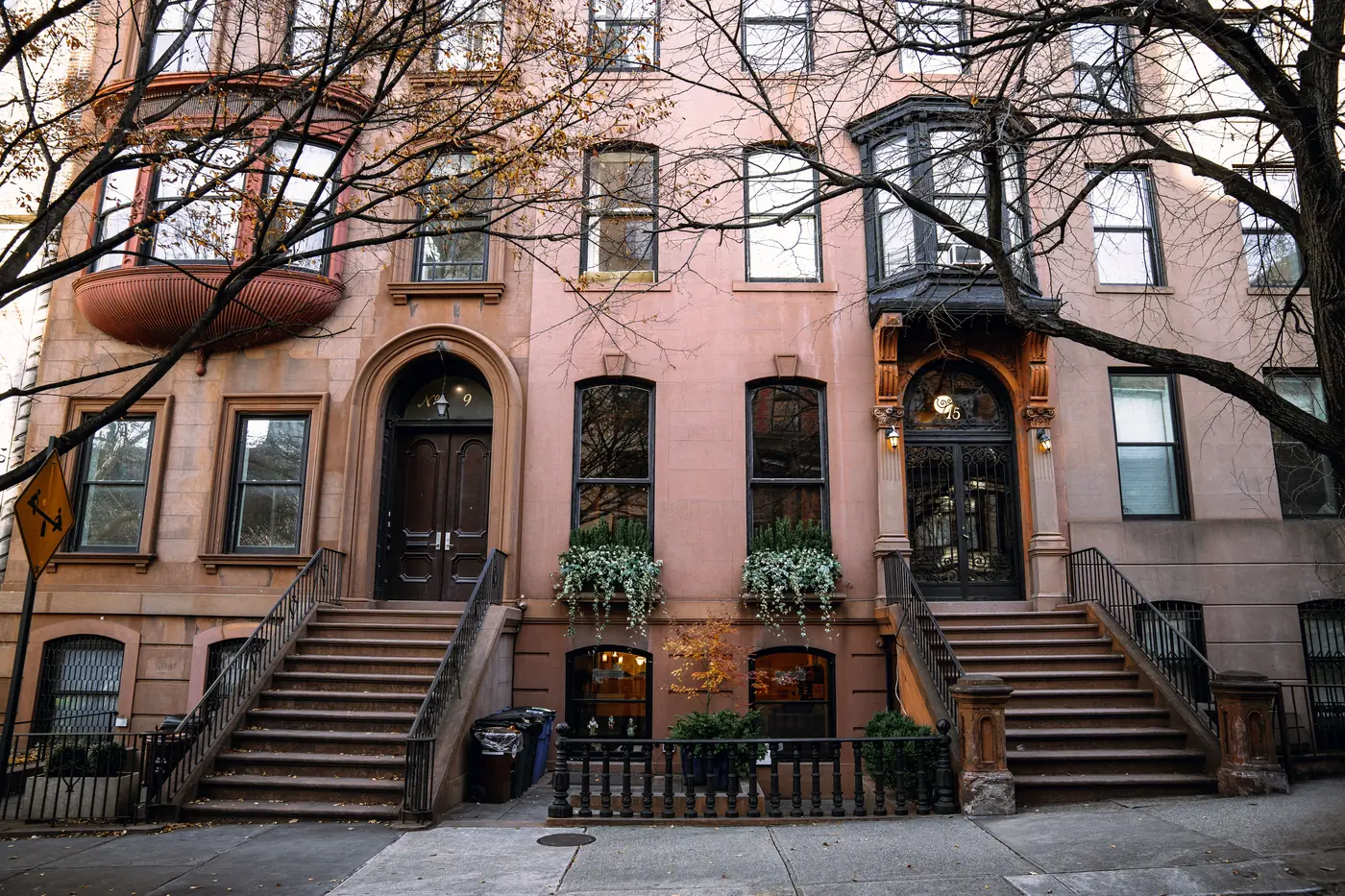
New York City at a glance
Figures last checked:
This is not a lending decision: a US specialist confirms what applies to your own situation.
| House prices 2025 | Median one-family home: $950,000 in Brooklyn, $830,000 in Queens, $710,000 on Staten Island, $660,000 in the Bronx, $7.4 million in Manhattan (NYC Department of Finance). |
|---|---|
| Suburbs 2025 | Median residential sale price: Westchester $925,000, Nassau $840,000, Suffolk $695,000 (New York State). |
| Loan limit 2026 | $1,209,750 for a one-unit home in Manhattan and Brooklyn. |
| Buyer's taxes at closing | Mansion tax of 1% from $1 million, rising in steps to 3.9% at $25 million. Mortgage recording tax of $2.05 to $2.175 per $100 borrowed on houses and condos. |
| Second homes | From January 2027 the city bills a yearly Non-Primary Residence Surcharge on high-value homes that are nobody's primary residence. |
| Short-term rental | Letting a whole apartment for under 30 days is not allowed, even if you own it. |
| Flights home | More than twenty European airlines serve JFK. |

Before you make an offer in New York
- Decide between co-op and condo with your intended use in mind.
- Hire a New York real estate attorney before you make an offer.
- Have the attorney read the by-laws, proprietary lease or offering plan.
- Ask for a written estimate of closing costs, including mansion tax and mortgage recording tax.
- Check whether the Non-Primary Residence Surcharge would apply.
- Assume no abatement and no short-term rental income if it will not be your primary residence.
- Confirm whether the loan is conforming or jumbo, and whether the lender finances co-ops.
- Take advice on New York and federal estate tax before deciding how to hold the property.
- 100+people choose us every month
- 5permanent team members
- 10+specialists in our network
- 15+collaborating partners
And we are still growing. More about us
Our network and collaborating partners:








Start your scan for New York City
Share the outline of your plans. A US specialist who knows this area will come back to you, without obligation.
Questions people moving from Europe ask
Ready to start?
Tell us about your plans and a US specialist who knows New York City will come back to you.
Start my mortgage scanSources (22)
Figures and rules on this page were checked against these sources on 3 October 2026. Rates, prices and local rules change, so confirm anything you rely on before you commit.
- NYC Department of Finance, 2025 citywide annualized sales
- New York State Department of Taxation and Finance, residential median sale price by county
- New York Attorney General, cooperatives
- New York Attorney General, condominiums
- New York Attorney General, understanding and dealing with a co-op board
- Fannie Mae Selling Guide B4-2.3-04, co-op share loans
- New York State Bar Association, 5 steps for buying a home in New York State
- New York State, real estate transfer tax
- New York State, TSB-M-19(1)R, transfer tax and mansion tax changes
- New York State, mortgage recording tax
- New York State, form MT-15 mortgage recording tax rates
- NYC Department of Finance, Real Property Transfer Tax
- NYC Department of Finance, property tax rates
- NYC Department of Finance, determining your market value
- NYC Department of Finance, co-op and condo tax abatement
- NYC Department of Finance, Non-Primary Residence Surcharge
- Governor of New York, fiscal year 2027 budget signing (28 May 2026)
- NYC Office of Special Enforcement, FAQ for prospective short-term rental hosts
- New York State, estate tax
- NYC flood maps
- FHFA, conforming loan limits for 2026
- JFK Airport, airlines